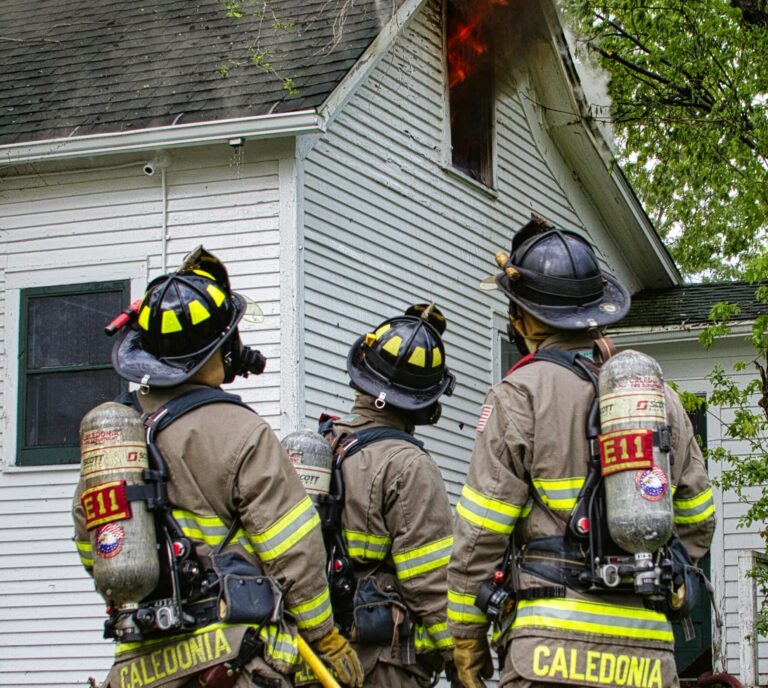
The first days after a fire do not feel like days. They feel like one long hallway of phone calls, and most people walk it without anyone telling them what order to do things in.
This is that order, written by a company that delivers housing into these weeks for a living. Your policy is the authority on your policy, and nothing here is legal advice. It is simply what we watch work, over and over, on the files we are called into.
Hour one: people first, then the scene
Everyone accounted for, including the animals. Nobody goes back inside until the fire department says the structure is safe, and that can take longer than it seems like it should.
Then two phone numbers. One is somewhere your family can sleep tonight. The other is your insurance carrier’s claim line.
Open the claim before you do anything else
Call the claim line the same day, even if you have no idea yet how bad it is. The claim does not need a damage figure to be opened, and the clock on everything that follows starts when it is.
Come off that call with three things written down somewhere that is not inside the house:
- the claim number
- the adjuster’s name and a direct number for them
- whether the carrier has a housing or ALE desk, and who it is
Use the phrase loss of use on that first call and ask what your policy carries for it. That is the part of a homeowners policy that pays to put you somewhere while the house is unlivable, and it is a separate limit from the money that rebuilds the house. We wrote a plain explanation of it here: what additional living expenses actually covers.
The first two days: three things that pay you back later
Photograph everything before anything is moved. Rooms, contents, the outside of the structure, the damage from several angles. Nobody has ever regretted taking too many pictures in week one.
Keep every receipt from the moment you walked out. Hotel, meals, clothes, pet boarding, fuel, a phone charger. Additional living expenses is a reimbursement line in most policies, and it reimburses what you can show.
Ask the adjuster what they want you to do to protect the property. Most policies ask you to take reasonable steps to prevent further damage, such as boarding up or covering a roof. Ask first, keep the receipt, and be careful about signing anything a stranger brings to the curb that first night.
The housing decision is the one people make too fast
A hotel is the easy answer in week one. It is often the wrong answer by month four, and almost nobody is thinking about month four while they are standing in a parking lot at two in the morning.
A rebuild after a total loss is measured in months, not weeks. Six to eighteen months is an ordinary range once permits, contractors and materials are in the picture. Loss of use is limited twice, by a dollar amount and by a number of months, and whichever runs out first ends the coverage. A nightly hotel rate and a long placement at a steady cost behave very differently against those two limits.
So ask the housing questions early, while there are still choices:
- What is my loss of use limit, in dollars and in months?
- Can a trailer be placed on my own property instead of a hotel or a rental house?
- Who authorizes that, you or a housing desk or a third party coordinator?
That second question matters more than it looks. Most adjusters reach for a hotel or a rental home because those are the two options in front of them. Housing on your own lot sits on the same line of the policy, and on a lot of files it is simply never offered. If you want it, ask for it by name. Our older piece on questions to ask your insurance agent about temporary housing covers the rest of that conversation.
What housing on your own property actually involves
We bring a home to your lot and connect it to what is already there. Water, sewer and power, hooked up as part of the setup rather than left for you to sort out. One company delivers it, sets it up, looks after it while you are living in it, and takes it away when the rebuild is finished.
Before anything is committed we want to know about the lot: how a truck and trailer get in, how much room there is to place the home, the grade of the ground, and where the utilities are. Some properties do not work, and we would rather tell you that on the phone than on delivery day.
The homes themselves are one, two and three bedroom layouts, fully furnished, with a full kitchen, a washer and dryer, and electric heat in every room. They are built to our own specification rather than bought off a dealer lot, and they are pet friendly, which matters more than people expect when a family is already down to what fit in the car.
Why staying on the lot is worth more than it looks
The children stay at the same school. The same neighbors are still across the street. The dog has the same yard. The mail comes to the same box. And you are standing on the property every day while it is being rebuilt, which is worth something on its own when there are a dozen decisions a week to make about your own house.
Nobody asks for this. If you are in it anyway, staying put is usually the version of it that costs your family the least.
What happens when you call us
We will ask where the property is, whether a claim is open, who the adjuster is, and how many people and pets are being housed. If it is a catastrophe event with a lot of homes down in one area, that changes the conversation too, and we work those events all year.
We are paid through the claim, so your adjuster or the carrier’s housing desk is part of the conversation. We are happy to speak with them directly. Plenty of families reach us first and then hand us to their adjuster, and that works fine.
Dispatch is answered any hour, including the hour you are probably reading this. Call 346-708-4607, or send us the details through the contact form and we will call you.